Most buyers tell me they want a waterfront home on the Grand Strand before they have decided what kind of water they actually want to live on. That distinction matters more than the zip code. The best waterfront neighborhoods in Myrtle Beach and across the Grand Strand fall into a few very different categories, and the one you choose changes your price, your insurance, your maintenance, and how you spend a Saturday.
I came into real estate from custom home building, so I look at a waterfront property differently than most agents. I am thinking about the dock and the bulkhead, the elevation of the first floor, how the home was framed for salt air, and what the next storm season asks of it. A pretty view sells itself. The construction behind it is where buyers either protect their money or lose it.
Here is how I walk clients through the waterfront market, neighborhood by neighborhood, so you can match the right water to the way you actually want to live.
The four kinds of waterfront on the Grand Strand
Before we talk neighborhoods, understand the water itself. On the Grand Strand, "waterfront" usually means one of four things, and they do not cost or behave the same way.
- Oceanfront. Direct Atlantic frontage. The scarcest and most expensive category. Grand Strand oceanfront pricing has run to record highs, and there are stretches where no vacant beachfront residential lots are even listed for sale across Horry and Georgetown counties. This is a top-of-market segment.
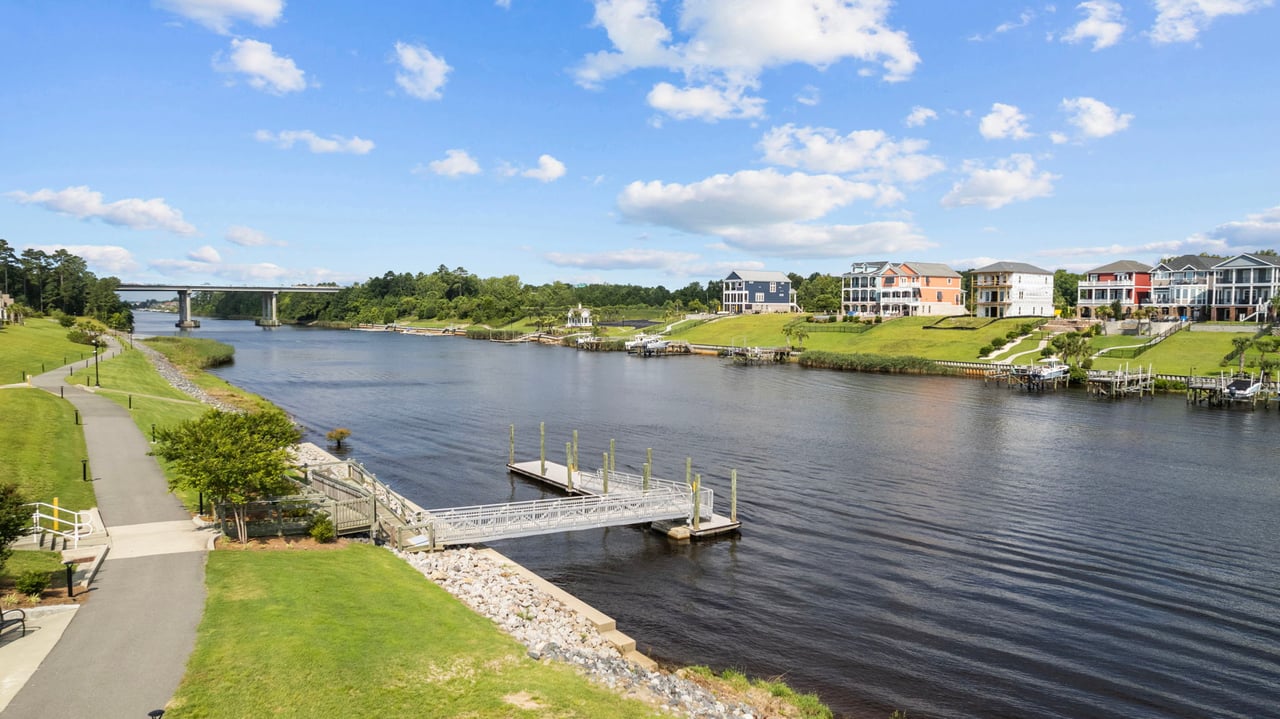
- Intracoastal Waterway (ICW). Homes on the deep navigable channel that runs the length of the Strand. Big-water views, deep-water dockage, and direct boat access to the inlets and ocean. This is the center of the luxury waterfront market between roughly $1M and several million.
- Channel and canal front. Saltwater channels and creeks that feed off the inlets, common in Cherry Grove. You get a private dock and a boat ride to the ocean without paying full oceanfront pricing.
- Creekfront and marshfront. Tidal creek and salt marsh frontage, strongest around Murrells Inlet and the south end. Quieter water, fishing and kayak access, and some of the best sunset light on the coast.
Once you know which of those four you want, the neighborhood choice gets a lot simpler.
Grande Dunes: the ICW benchmark
If your target is Intracoastal Waterway living with luxury amenities, Grande Dunes sets the standard. It is a master-planned, gated community of roughly 2,200 acres that runs from the oceanfront all the way to the ICW, which is unusual for a single community on the Strand. Inside it you get a private marina on the Waterway, two golf courses, the Members Club, and the Ocean Club beachfront amenity.
Pricing spans a wide band. Villas and patio homes start well below the headline number, while ICW-front and estate homes climb into the multiple millions. Recent sold data has put the community median in the mid-$1M range, which tells you it is firmly a luxury address without being exclusively ultra-high-end.
For boaters, the appeal is direct. A home with private dockage on the Waterway, or a slip at the marina, puts you minutes from Little River Inlet and the ocean. For buyers who want the lifestyle without a private dock to maintain, the villas and golf-view homes are a lower-maintenance way into the same gates.
Murrells Inlet and the south end: creekfront living
Drive south and the water changes character. Murrells Inlet is built around a working tidal estuary, and it is the spot I send buyers who want marsh and creek frontage rather than big open water. It is known as the Seafood Capital of South Carolina, and the half-mile MarshWalk boardwalk links the restaurants and docks that give the village its identity.
Creekfront and marshfront homes here trade big-water wakes for quiet tidal water, sunrise fishing, and kayak or skiff access right off the back yard. You will also find pockets of larger luxury homes on the deeper creek runs with private docks. Just south, the Waccamaw Neck toward Pawleys Island and DeBordieu carries that same low-key, water-and-marsh lifestyle into higher price bands.
If this is your water, start with my Murrells Inlet neighborhood guide and then let's talk about which creeks hold their depth at low tide, because not all of them do.
Cherry Grove and the North Strand channels
At the north end, Cherry Grove offers something specific and a little under the radar: a network of saltwater channels that wind through the residential streets behind the beach. You can own a home a few blocks from the Atlantic, tie a boat to a private floating dock in your back yard, and run out through the inlet to the ocean.
Channel-front homes in Cherry Grove and communities like Heritage Shores range widely, from modest older cottages to large rebuilt luxury homes pushing toward $2M, many with their own docks. It is one of the better values on the coast for true private-dock waterfront, because you are paying channel pricing rather than oceanfront pricing for water access.
The North Strand also gives you Ocean Drive, Tilghman, and the wider North Myrtle Beach market. My North Myrtle Beach guide and the Cherry Grove Beach page are the right places to start if the channels are calling you.
Little River and the Intracoastal Waterway
Little River is the quieter, more historic ICW option at the top of the Strand. The Waterway here is lined with marinas, including Harbourgate, and the town keeps a real working-waterfront feel with seafood, fishing charters, and a slower pace than the central Strand. For a buyer who wants deep-water access and Intracoastal views without Grande Dunes pricing, Little River is worth a serious look.
You are also minutes from Calabash, the North Carolina line, and some of the least crowded stretches of coast on the Strand. Start with my Little River neighborhood guide to get a feel for the inventory.
What I check on a waterfront home that other agents miss
This is where my building background earns its keep. A waterfront home is two purchases: the house and the structure that holds the water back. Before you fall for a view, here is what I am inspecting.
- The dock and bulkhead. Pilings, decking, and the bulkhead or seawall are expensive to replace and easy to neglect. I want to know the age, the material, and whether permits are current, because a failing bulkhead can run into six figures.
- First-floor elevation. How high the living space sits above base flood elevation drives both your storm risk and your insurance premium. A foot of elevation can mean thousands of dollars a year.
- Framing and finishes for salt air. Coastal homes take a beating. I look at corrosion on connectors and fasteners, the condition of windows and doors rated for wind, and whether the previous owner used materials that hold up near salt water or cut corners.
- Drainage and the lot at low tide. I visit creek and channel properties at low tide on purpose. A dock that floats beautifully at high water can sit on mud six hours later, which changes how usable your boat access really is.
None of this shows up in a listing photo. All of it shows up in your wallet over the years you own the home.
Flood insurance and what waterfront really costs to own
Waterfront ownership comes with carrying costs that go beyond the mortgage, and flood coverage is the big one. Most of the Grand Strand's true waterfront sits in FEMA's higher-risk zones. Oceanfront and near-ocean parcels often fall in VE zones, the coastal high-hazard areas exposed to wave action, while many ICW, channel, and creek properties sit in AE zones with a mapped base flood elevation.
If your property is in a high-risk zone and you carry a mortgage, flood insurance is required by federal law and has to be in place before closing. Under FEMA's current pricing approach, premiums on many existing policies keep stepping up each year toward their full risk-based rate, so it is smart to pull the actual quote early rather than assume. In 2026, private carriers are also competing harder in the lower-risk coastal pockets, and sometimes beat the federal program, so compare both before you commit.
The City of Myrtle Beach publishes its own flood protection and zone information if you want to understand how the maps work. When we tour homes, I will pull the flood zone and, where I can, the elevation certificate, so you are pricing the true cost of ownership and not just the list price.
Frequently asked questions
What is the difference between oceanfront and ICW homes in Myrtle Beach?
Oceanfront means direct Atlantic frontage and is the most expensive, most limited category on the Strand. ICW means frontage on the Intracoastal Waterway, the navigable inland channel, which gives you deep-water dockage and boat access at a lower price point than oceanfront while still offering big-water views.
How much is a waterfront home on the Grand Strand?
It depends entirely on the type of water. Channel and creek homes can start in the high hundreds of thousands, ICW luxury homes generally run from about $1M into the several millions, and oceanfront sits at the very top of the market. The category you choose matters more than the town.
Do you need flood insurance on a Myrtle Beach waterfront home?
If the home is in a high-risk FEMA flood zone and you have a mortgage, yes, it is federally required and must be in place before closing. Even outside high-risk zones, a meaningful share of flood claims come from lower-risk areas, so many waterfront owners carry it regardless.
Which Grand Strand waterfront neighborhood is the best value?
For true private-dock waterfront, the Cherry Grove channels often deliver the most water access per dollar, because you pay channel pricing rather than oceanfront pricing. Little River offers similar value for Intracoastal access with a quieter, working-waterfront feel.
Let's find your water
The best waterfront neighborhood on the Grand Strand is the one that matches how you actually want to use the water, at a carrying cost you understand going in. I will help you weigh oceanfront against ICW, channel, and creek, walk the docks and bulkheads with a builder's eye, and price the real cost of ownership before you make an offer.
When you are ready, call or text me at (803) 517-3536, or start with a home valuation if you are weighing a move from one waterfront home to another. You can also browse current Grand Strand listings to see what is on the water right now.
Mitchell Adkins, Founding Agent, SERHANT. Precision Marketing. Premier Results.