Most buyers who ask me about Myrtle Beach ICW homes come in picturing the same thing: a boat lift out back, coffee on the dock, and a fifteen minute run to the inlet on a Saturday morning. That life is very real here. What surprises people is how different two Intracoastal Waterway homes at the same price can be once you look past the view.
I spent years building custom homes on the Grand Strand before an accident moved me into brokerage full time. That background is why I walk a waterfront property differently than most agents. On the ICW, the dirt, the dock, and the way the house was built matter as much as the square footage. Get those right and you own one of the best lifestyles on the coast. Miss them and you inherit somebody else's shortcuts.
Here is what I want every buyer to understand before they write an offer on an Intracoastal Waterway home.
ICW is not the same as oceanfront, and that is the point
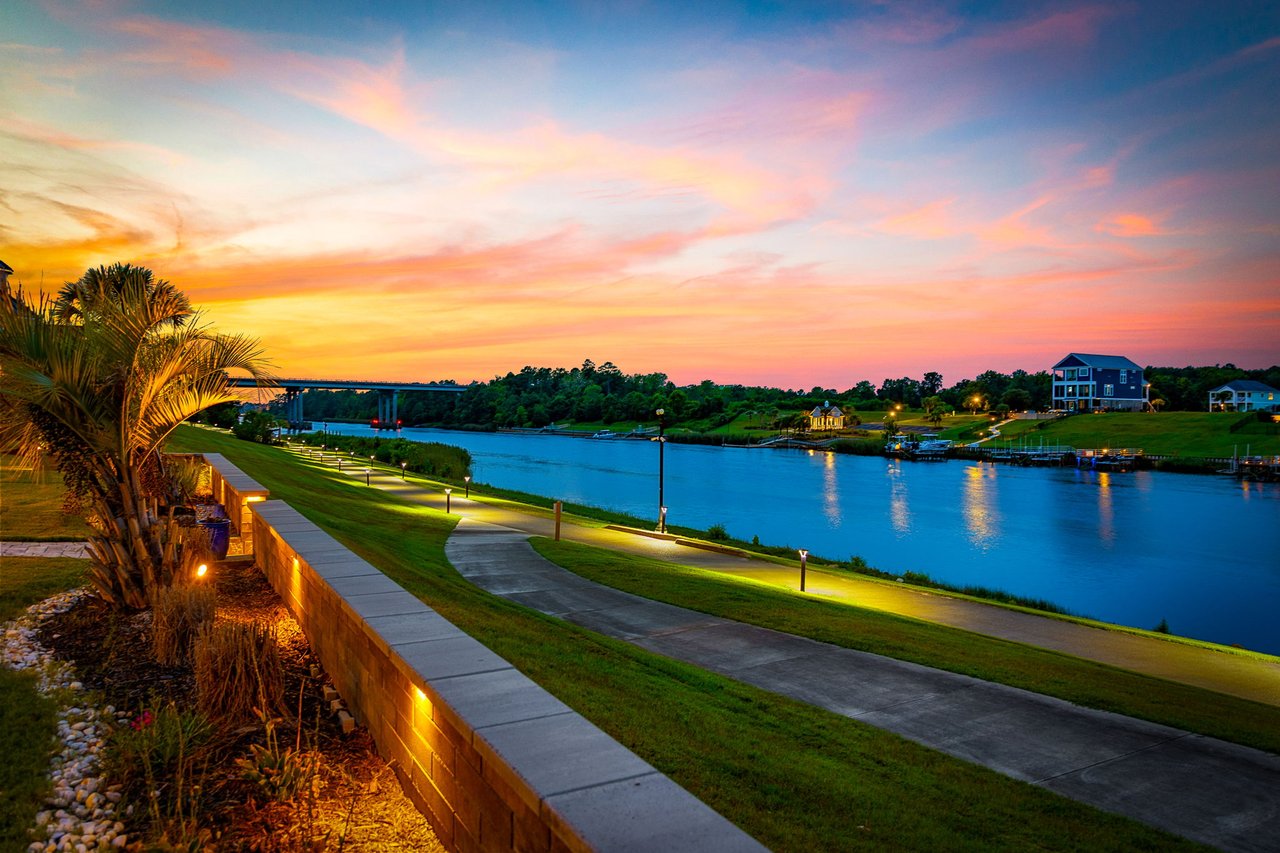
The Intracoastal Waterway runs the length of the Grand Strand, a protected channel that sits a few blocks inland from the Atlantic for much of its route. In parts of Cherry Grove the waterway and the ocean are less than half a mile apart. So you can keep a boat behind the house, reach the beach in minutes, and still sit on calm water instead of open surf.
That trade shows up in three places. The water is quieter, which boaters and families with young kids tend to prefer. The homes are usually bigger, with real yards, garages, and floor plans that oceanfront condos cannot match. And the price is often meaningfully lower than a comparable oceanfront property, which is the part that makes ICW homes such a strong value in the luxury tier.
Oceanfront still wins if your priority is unobstructed surf views and short term rental income. If you want to actually use the water, a Myrtle Beach ICW home is usually the smarter buy.
What ICW homes actually cost on the Grand Strand
Pricing on the waterway spans a wide range, so averages can mislead you. Entry level waterway-view homes trade well below the luxury tier, while true deep-water estates with docks run into the millions.
In the luxury segment specifically, ICW listings on the Grand Strand have recently carried a median list price in the neighborhood of $1.5 million, and it is common to see custom waterfront homes listed above $2 million. As a rough frame:
- Waterway-view homes without direct frontage: often in the mid-to-upper six figures
- Direct ICW frontage with a dock: frequently $1 million and up
- Custom deep-water estates in a premier community: $2 million and beyond
Two homes can carry the same list price and be worth very different money. A lot with a permitted dock, deep water at low tide, and a well-built bulkhead is worth a premium over a similar-looking lot where none of that is guaranteed. That gap is exactly what I help buyers price.
The dock is the whole point, so vet it before you fall in love
A waterfront home without usable water access is just an expensive house near a river. Before you get attached, I want three questions answered.
Is there a dock, and is it permitted? Private docks and boat lifts on South Carolina's navigable waters require a critical area permit through the state's Department of Environmental Services. If a dock is already built and properly permitted, that is real value you are buying. If it is not, you are buying a maybe.
Can this lot even have a dock? Many waterway subdivisions operate under an approved Dock Master Plan that spells out which lots are eligible for a private dock. Not every waterfront lot qualifies. The HOA and the state both keep this on file, and I check it before you assume you can put in a lift.
How is the water at low tide? Deep-water access is not universal along the ICW. Some slips sit in a foot of mud when the tide drops. I would rather find that out during due diligence than after closing.
One practical note on the lifestyle side: within fifty feet of a dock, moored vessel, or a person in the water you are limited to idle speed, and the same applies within 100 yards of the Atlantic. That keeps the waterway civil, and it is worth knowing before you assume you can open the throttle behind the house.
What I check on a waterfront build that most agents walk right past
This is where my construction background earns its keep. Waterfront homes take abuse that inland homes never see: salt air, humidity, tidal movement against the bulkhead, and wind. The build details decide whether the house holds up or quietly rots.
A few of the things I look at closely:
- The bulkhead and shoreline. Is it sound, and how old? Bulkhead replacement is a serious expense, and a failing one is easy to overlook on a pretty day.
- Elevation and the foundation. How the home sits relative to the base flood elevation affects both safety and your insurance cost for as long as you own it.
- Moisture management. Flashing, siding material, crawlspace ventilation, and drainage. Coastal homes fail from water intrusion far more than from anything dramatic.
- Build quality on newer construction. Not every custom home on the water was built to the same standard. I can usually tell within one walkthrough where a builder invested and where they cut.
None of this is meant to scare you off the water. It is meant to make sure the home you buy is the one you think you are buying.
The carrying costs nobody quotes you upfront
Standard homeowners insurance in South Carolina does not cover flooding, so a separate flood policy is part of owning almost any waterfront home here. Horry County participates in the National Flood Insurance Program, and your specific cost depends on your flood zone, your elevation, and FEMA's current risk rating for the property.
For waterfront homes, flood coverage commonly adds a few thousand dollars a year, and I have seen it run higher on lower or older structures. Wind and hail coverage is a separate line item on top of that. None of this is a dealbreaker, but you should underwrite it before you buy, not after. I help buyers pull the actual flood zone and get real insurance quotes during due diligence so the monthly number is honest. You can review the state's critical area permitting rules if you want to understand what governs docks and shoreline structures here.
Where the ICW homes are
The waterway touches several distinct pockets of the Grand Strand, and each has its own feel.
- Grande Dunes. The premier address on the ICW, with waterway sections like Bal Harbor, Members Club, Riviera Village, and Waterside Pointe, plus a private marina on the water.
- Carolina Forest. Gated waterway communities including The Bluffs on the Waterway, The Battery on the Waterway, Waterway Palms Plantation, and Carolina Waterway Plantation.
- North Strand and Little River. Quieter frontage with quick inlet access, close to marinas that put the open ocean a short cruise away.
- Murrells Inlet and the south end. More of a creek-and-marsh boating character than the open channel farther north.
If you want to see what is active right now, you can browse current luxury homes for sale in Myrtle Beach and filter to the waterway, or tell me your must-haves and I will send you only the ones worth your time.
Frequently asked questions
What is the difference between oceanfront and ICW in Myrtle Beach?
Oceanfront sits directly on the Atlantic with surf views and stronger rental demand. ICW homes sit on the protected inland waterway, usually offering calmer water, private docks, more house for the money, and lower insurance. Many ICW homes are still only minutes from the beach.
Do you need flood insurance on a Myrtle Beach waterfront home?
In almost every case yes. Standard homeowners policies in South Carolina exclude flooding, and lenders typically require a flood policy on waterfront property. The cost depends on your flood zone and elevation, so quote it before you buy.
Can every waterway lot add a private dock?
No. Docks require a state critical area permit, and many communities limit eligible lots through a Dock Master Plan. Always confirm dock eligibility before assuming you can build one.
How much do luxury ICW homes cost on the Grand Strand?
The luxury tier has recently run around a $1.5 million median list price, with custom deep-water estates commonly listed above $2 million and waterway-view homes available for less.
Ready to look at the water?
An ICW home is one of the best buys on the Grand Strand when the dock, the lot, and the build all check out. That is exactly what I vet for my buyers, and it is where my construction eye saves you from an expensive surprise. If you are thinking about waterfront, start with my Myrtle Beach buyer's guide, then reach out and we will map out what you actually want on the water.
Call or text me at (803) 517-3536, or get in touch here. Precision Marketing. Premier Results.
Mitchell Adkins, Founding Agent, SERHANT.