Is the sound of waves or the quiet ripple of a tidal creek calling your name? On Pawleys Island, you can choose a home that puts you right on the ocean or along the marsh and creeks. Each setting offers a different lifestyle, cost profile, and risk picture. In this guide, you’ll compare oceanfront, second-row, and creekside living so you can pick the spot that fits how you want to live.
You’ll learn what views and access feel like day to day, how flood zones and permits factor in, and what to plan for with insurance and maintenance. You’ll also get a buyer checklist tailored to Pawleys Island. Let’s dive in.
Pawleys Island’s water settings
Pawleys Island is a narrow barrier island in Georgetown County with the Atlantic Ocean on one side and tidal marsh and creeks on the other. Barrier islands are dynamic. Beach width, dunes, and creek channels shift over time. That movement shapes both the views you enjoy and the maintenance and risk you plan for.
Storm surge and nor’easters are the main acute hazards on the ocean side, and they can also push water into the creeks and marshes. Relative sea level rise and high-tide flooding are long-term realities across the South Carolina coast. If you want to visualize future water levels and inundation scenarios, explore the NOAA Sea Level Rise Viewer.
Oceanfront: What you get
Views and access
- Unobstructed ocean and beach vistas with sunrise and surf views.
- Direct beach access from your lot or a short set of steps.
- Immediate exposure to waves and open ocean activity.
Lifestyle and feel
- Daily beach time is easy: swimming, sunbathing, surf walks, and running.
- Seasonal foot traffic can be higher near public access points.
Home styles and build considerations
- Raised beach houses on pilings are common to meet flood and wave-action requirements.
- Materials often include marine-grade fasteners, composite decking, and wind-rated design.
- Mechanical systems are usually elevated to reduce flood risk.
Insurance and permitting snapshot
- Many oceanfront parcels fall in high-hazard V zones. Check your exact parcel on the FEMA Flood Map Service Center and obtain an Elevation Certificate.
- Get preliminary quotes for both flood insurance under the NFIP and wind/hurricane coverage early.
- Any shoreline work is regulated. The South Carolina Office of Ocean and Coastal Resource Management details permits and rules for coastal construction. Review current guidance on SCDHEC OCRM.
Maintenance and durability
- Salt spray accelerates corrosion. Plan for stainless or coated hardware and regular washing.
- Decks and siding need scheduled inspections and sealing.
- Dune systems and walkovers can require upkeep after storms.
Creekside: What you get
Views and access
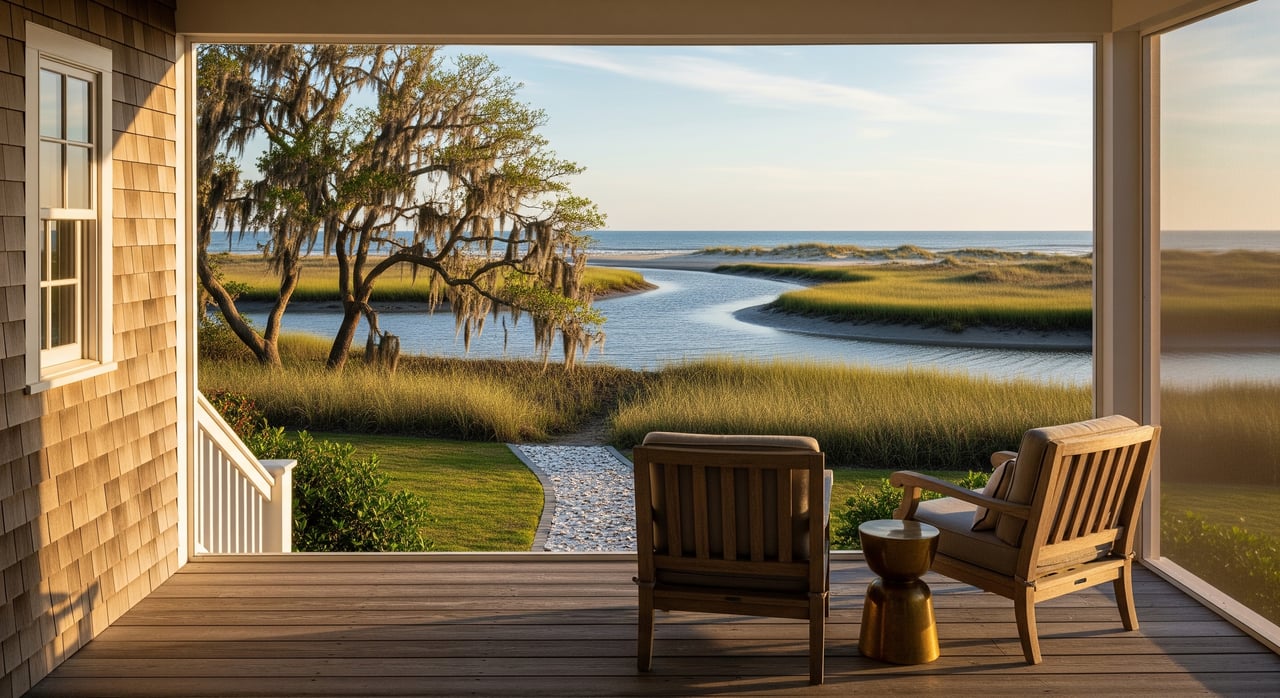
- Marsh panoramas, tidal creeks, and sunsets over spartina grass.
- Direct access for kayaking, small boats, fishing, and birding.
- Beach time is still easy with a short drive or walk depending on location.
Lifestyle and feel
- Quieter water setting with wildlife views and a more private feel.
- Dock life is common: boat lifts, fish cleaning stations, and screened porches overlooking the marsh.
Home styles and build considerations
- Houses are often elevated, with dock structures when allowed.
- Lots can be larger, though site specifics vary widely.
- Some sites experience tidal flooding or channel migration. You will want a local, coastal-experienced inspection.
Insurance and permitting snapshot
- Creekside parcels may be in AE or even V zones depending on elevation and creek exposure. Confirm your map panel and base flood elevation on the FEMA Flood Map Service Center.
- Docks, bulkheads, and living shorelines require permits. Start with SCDHEC OCRM for state process and timelines.
Maintenance and durability
- Dock pilings, fasteners, and lifts need periodic inspection and replacement.
- Bank stabilization should match site conditions. Explore nature-based options through resources from South Carolina Sea Grant and Clemson Extension.
- Mechanical systems should be set above base flood elevation and protected from salt and moisture.
Second-row: The middle path
Second-row homes sit one lot inland from the beach. They can be a strong value if you want proximity without the highest oceanfront premiums.
- Partial ocean views are possible, especially from elevated decks.
- Beach access is often a short walk with less direct wave exposure.
- Construction can vary from classic Lowcountry cottages on short pilings to newer two-story homes.
From a resale standpoint, second-row often appeals to a broad buyer pool and can offer more interior space and storage compared to oceanfront, subject to flood rules.
Cost, value, and resale
- Oceanfront usually carries the highest price premium due to rarity and direct beach access.
- Second-row often offers the most price-sensitive way to live steps from the sand.
- Creekside values vary. Deepwater access and larger lots can command premiums that rival oceanfront, while marsh-view lots without boating access may be priced lower.
Resale demand is strong island-wide, but buyer pools can differ. Oceanfront buyers accept higher insurance and maintenance costs for direct access and views. Creekside buyers are often boaters or nature lovers. Second-row tends to reach the widest audience.
Risk, insurance, and permits
Every parcel is different. Before you write an offer, take these steps:
- Verify flood zone and base flood elevation using the FEMA Flood Map Service Center, and request an Elevation Certificate.
- Get early quotes for NFIP flood insurance and a separate wind/hurricane policy.
- Review coastal permitting pathways for any docks, bulkheads, living shorelines, or oceanfront structures via SCDHEC OCRM.
- Visualize sea level rise scenarios and high-tide flooding with the NOAA Sea Level Rise Viewer.
Local ordinances, rental rules, and shoreline management plans can affect your use and carrying costs. Confirm current rules with the Town of Pawleys Island and Georgetown County during due diligence.
Maintenance and resilience tips
Salt, sun, and tides increase wear and tear. Plan ahead to protect your home and budget.
- Materials and finishes. Favor marine-grade fasteners, composite decking, and rot-resistant cladding. Wash exterior surfaces and refresh sealants on a schedule.
- Foundations and floodproofing. Elevated foundations reduce flood risk. Inspect for scour around pilings and keep mechanicals above base flood elevation.
- Docks and shorelines. Schedule inspections for docks and lifts. Where appropriate, consider living shoreline approaches that protect banks while supporting marsh ecology. Learn more from South Carolina Sea Grant and Clemson Extension.
- Utilities and septic. Confirm sewer or septic status. In high groundwater areas, septic systems require careful siting and routine maintenance.
- Budgeting for the coast. Set aside funds for flood and wind insurance, annual inspections, paint and stain cycles, HVAC servicing, and dock upkeep.
Which lifestyle fits you?
Use this quick guide to match your daily rhythm with the right location.
- Choose oceanfront if you want direct sand access, sunrise surf views, and you are comfortable budgeting for higher insurance and maintenance.
- Choose second-row if you want a short walk to the beach, slightly less exposure, and broad resale appeal.
- Choose creekside if you want sunset marsh views, boating and fishing access, and a quieter, nature-forward setting.
If you are still torn, tour both sides of the island at different tides and wind conditions. Pay attention to traffic, public access points, and the sounds and smells that define each micro-location.
Buyer checklist for Pawleys Island
Use this list to compare specific parcels and reduce surprises during escrow.
- Confirm the property’s FEMA flood zone and panel on the FEMA Flood Map Service Center. Request or order an Elevation Certificate.
- Obtain preliminary quotes for NFIP flood insurance and wind coverage before you finalize price.
- Review shoreline and dock permitting rules through SCDHEC OCRM. Ask about timelines and conditions.
- Visualize inundation scenarios with the NOAA Sea Level Rise Viewer.
- Verify sewer versus septic status and any recorded septic inspections or repairs.
- Order a coastal-focused home inspection. Include foundations/pilings, electrical routing, HVAC placement, moisture and mold checks, and dock structure.
- Ask for the seller’s claims history and any records of storm damage or repetitive loss.
- Confirm beach access easements, parking, and any HOA or rental rules with the Town and County.
Final thoughts
There is no wrong choice on Pawleys Island. Oceanfront puts the Atlantic at your feet. Creekside wraps you in marsh light and quiet water. Second-row often strikes a smart balance. The right answer is the one that aligns with your lifestyle, budget, and long-term plans.
If you want construction-informed guidance, remote-friendly showings, and a steady advocate through inspections and permits, connect with Mitchell Adkins. You will get clear advice on build quality, flood and wind considerations, and a smooth path to the coastal home that fits you.
FAQs
What is the flood risk for oceanfront homes on Pawleys Island?
- Many oceanfront parcels fall in V zones with higher wave action. Always verify your specific lot on the FEMA Flood Map Service Center and obtain an Elevation Certificate before quoting insurance.
How do I evaluate dock permits for a creekside lot on Pawleys Island?
- Start with SCDHEC OCRM for state rules. Site conditions, nearby resources, and waterways influence feasibility and timelines.
Where can I see sea level rise projections for Pawleys Island properties?
- Use the NOAA Sea Level Rise Viewer to explore inundation scenarios and tide impacts across Pawleys Island and surrounding marsh systems.
Do Pawleys Island homes require special coastal construction methods?
- Yes. Local codes and floodplain ordinances often require elevated foundations, engineered connections, and breakaway walls in certain zones. Requirements are more stringent in V zones than AE zones.
What ongoing costs should I expect for a creekside home on Pawleys Island?
- Budget for flood and wind insurance, dock and lift maintenance, shoreline stabilization where allowed, and routine coastal wear items like paint, sealants, and HVAC servicing.
Are short-term rentals allowed on Pawleys Island and does location matter?
- Rules can vary and change over time. Confirm current rental regulations directly with the Town of Pawleys Island and Georgetown County during due diligence.